Understanding the Melting Point of 304 and 316 Stainless Steel in Commercial Metal Applications
Stainless steel is widely used in the metal decoration and construction industry due to its durability, strength, and resistance to corrosion. One of the most crucial factors that influence its application in high-temperature environments is its melting point. For manufacturers, engineers, and architects working with stainless steel doors and structural elements, understanding the melting points of different stainless steel grades is essential for selecting the right material.
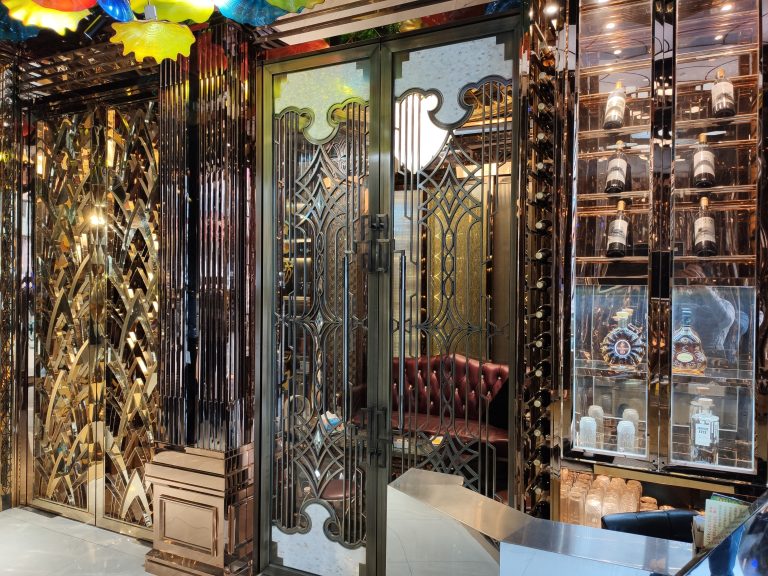
At LeadMC, we specialize in the design and manufacture of high-quality stainless steel doors for commercial spaces such as hotels, restaurants, and retail environments. With over a decade of experience in the metal decoration industry, we understand the importance of choosing materials that offer superior performance in various environmental conditions. This article explores the melting points of 304 and 316 stainless steel and their significance in commercial applications.
What is the Melting Point of Stainless Steel?
The melting point of stainless steel refers to the temperature at which it transitions from a solid to a liquid state. This property plays a critical role in fabrication processes such as welding, forging, and casting. In general, stainless steel has a melting range between 1400-1450°C (2552-2642°F), though specific alloy compositions influence this range.
The melting point is particularly significant for industries that require stainless steel to retain its structural integrity under high temperatures, such as in aerospace, automotive, and industrial manufacturing. For LeadMC’s stainless steel doors, which may be exposed to heat and stress in commercial settings, material selection based on melting characteristics ensures longevity and reliability.
Melting Point of 304 Stainless Steel
What is 304 Stainless Steel?
304 stainless steel is one of the most commonly used austenitic stainless steels, consisting of 18% chromium and 8% nickel. This composition gives it excellent corrosion resistance, high strength, and good formability, making it suitable for applications in construction, food processing, and industrial equipment.
Melting Point of 304 Stainless Steel
The melting range of 304 stainless steel is between 1400-1450°C (2552-2642°F). This relatively high melting point makes it well-suited for applications that require heat resistance, such as commercial kitchen equipment, heat exchangers, and industrial doors.
Factors Influencing the Melting Point
Several factors affect the melting point of 304 stainless steel, including alloying elements and minor impurities. While chromium and nickel enhance its heat resistance, small variations in composition can slightly alter its melting range. LeadMC utilizes high-grade 304 stainless steel in applications where both heat resistance and corrosion resistance are necessary.
Melting Point of 316 Stainless Steel
What is 316 Stainless Steel?
316 stainless steel is another austenitic grade but contains 16% chromium, 10% nickel, and 2% molybdenum. The presence of molybdenum enhances its resistance to corrosion, particularly against chlorides and harsh environmental conditions. This makes 316 stainless steel ideal for marine environments, chemical processing plants, and high-humidity commercial spaces.
Melting Point of 316 Stainless Steel
The melting range of 316 stainless steel is slightly lower than 304, between 1375-1400°C (2507-2552°F). The presence of molybdenum and higher nickel content contributes to this minor decrease in melting temperature.
Benefits of Molybdenum Addition
The addition of molybdenum not only affects the melting point but also improves corrosion resistance, strength, and heat performance. This makes 316 stainless steel a preferred material in applications that demand high durability under extreme environmental conditions, such as chemical plants, coastal buildings, and luxury hotel facades.
Comparing the Melting Points of 304 and 316 Stainless Steel
Key Differences
304 stainless steel melts at a slightly higher range (1400-1450°C) compared to 316 stainless steel (1375-1400°C).
316 stainless steel contains molybdenum, which enhances corrosion resistance but lowers the melting point.
304 stainless steel is preferred for applications requiring higher heat resistance, while 316 is ideal for environments with high corrosion exposure.
Comparing the Melting Points of 304 and 316 Stainless Steel
Key Differences
304 stainless steel melts at a slightly higher range (1400-1450°C) compared to 316 stainless steel (1375-1400°C).
316 stainless steel contains molybdenum, which enhances corrosion resistance but lowers the melting point.
304 stainless steel is preferred for applications requiring higher heat resistance, while 316 is ideal for environments with high corrosion exposure.
Choosing the Right Alloy for Commercial Applications
For LeadMC’s stainless steel doors and decorative metal components, selecting between 304 and 316 stainless steel depends on the project requirements:
304 Stainless Steel: Best for indoor applications, high-temperature environments, and areas requiring structural strength.
316 Stainless Steel: Ideal for exterior applications, humid environments, and projects needing superior corrosion resistance.
Why Melting Point Matters in Fabrication and Welding
Fabrication Considerations
During manufacturing processes like laser cutting, welding, and forming, the melting point of stainless steel determines how the material behaves under heat. Since 304 stainless steel has a slightly higher melting point, it retains heat better, making it easier to work with in certain applications.
Welding Applications
Different welding techniques require precise temperature control. Understanding the melting points of 304 and 316 stainless steel ensures that the correct welding filler material and heat settings are used, preventing defects such as overheating and weak joints.
Heat Treatment and Its Effect on Stainless Steel Performance
While heat treatment can alter the mechanical properties of stainless steel, it does not significantly change its melting point. Common heat treatment methods for stainless steel include:
Annealing: Improves ductility and ease of fabrication.
Quenching: Increases strength but may reduce corrosion resistance.
Stress Relieving: Enhances structural stability after welding.
Thermal Conductivity of 304 vs. 316 Stainless Steel
304 stainless steel has a thermal conductivity of about 16 W/m·K.
316 stainless steel has a slightly lower thermal conductivity at around 14 W/m·K due to the molybdenum content.
This means 304 stainless steel transfers heat slightly better, making it more suitable for heat-intensive applications like heat exchangers and commercial kitchen equipment.
Applications Where Melting Point and Thermal Properties Matter
Understanding the thermal properties of stainless steel helps in choosing the right material for:
Hotel and Restaurant Kitchen Equipment: 304 stainless steel ensures durability in high-heat cooking environments.
Exterior Facades and Doors: 316 stainless steel provides long-term resistance against weather and humidity.
Industrial and Chemical Processing Equipment: 316 is the superior choice for environments exposed to corrosive substances.
Conclusion
For commercial projects involving stainless steel doors and architectural metalwork, both 304 and 316 stainless steel offer excellent performance. 304 stainless steel provides higher heat resistance, making it suitable for high-temperature environments. 316 stainless steel, with added molybdenum, delivers superior corrosion resistance, making it the better choice for humid or chemical-exposed settings.
At LeadMC, we leverage our 10+ years of expertise in stainless steel fabrication to offer the best solutions tailored to commercial applications. Whether for high-end hotels, restaurants, or industrial spaces, selecting the right stainless steel ensures long-lasting quality and performance.